Safety
Is black henna dangerous?
Black henna is not henna. It is henna paste, or sometimes no henna at all, mixed with para-phenylenediamine (PPD), a hair-dye chemical that is illegal to apply to skin in the UK. It gives an instant, near-black stain within an hour, while real henna paste is olive green when applied and takes 24 to 48 hours to darken to a natural rust red.
I am Piya Patel, a practising henna and brow artist based in Reading. Every claim on this page is either something I do myself, or is linked to the source it comes from: the NHS, the British Skin Foundation, or a real GOV.UK product safety recall. Nothing here is invented.
What black henna actually is
There is no such plant as "black henna." Natural henna comes from the Lawsonia inermis plant and, on its own, never stains darker than a deep reddish brown. When a paste is sold as "black henna" and produces a genuinely black or near-black mark, the colour is doing that work, not the henna, and PPD is the chemical most commonly responsible. The NHS confirms this directly: "You may be more at risk of an allergic reaction if you have (or have previously had) a black henna tattoo. This is because the paste used for the tattoos contain high levels of PPD."
Why it is used instead of real henna
Natural henna is slow by design: it goes on olive green, and the stain needs 24 to 48 hours after the paste comes off to darken to its final colour. That is a difficult sell to someone on a day trip or a two-week holiday who wants a finished-looking tattoo in the photo they take that afternoon. Black henna solves that problem the wrong way, trading a look that appears instantly for a chemical that was never meant to sit on skin.
The health risks
PPD reactions on skin can include chemical burns, painful blistering and permanent scarring, and pigment changes that outlast the mark itself. The British Skin Foundation has surveyed this directly and found roughly one in five children and one in five adults surveyed were at risk from black henna exposure, and that three-quarters of respondents did not know black henna tattoos contain PPD at all.
The reaction timeline
A PPD reaction typically does not appear straight away. Onset is usually 3 to 10 days after application, which is exactly long enough for someone to be home from holiday, or well past the event the tattoo was for, before connecting a spreading rash or blistering back to the henna stall. That delay is part of what makes black henna so easy to underestimate.
A lifelong consequence: sensitisation to future hair dye
The most serious long-term risk is not the tattoo itself. Once skin has been sensitised to PPD, that sensitivity does not go away, and it raises the risk of a severe allergic reaction the next time PPD is encountered, most commonly in ordinary permanent hair dye, years later and with no connection obvious to whoever is reacting. The NHS's own guidance links the two directly: a previous black henna tattoo is a stated risk factor for a future hair-dye reaction.
UK legal status, and who enforces it
PPD is not permitted for direct application to skin under UK cosmetics regulation. Enforcement sits with the Office for Product Safety and Standards (OPSS) and local Trading Standards authorities, and this is not a dormant rule. OPSS has issued real, current product safety recalls for henna products sold in the UK, including Hania Bridal Henna Paste and Nadara Mehndi Henna Cone, both recalled after testing found phenol, a banned chemical, in the paste. Products that should never have reached a UK buyer are still turning up on sale.
How to tell natural henna from black henna, before it touches your skin
You do not need a lab to make this call. Three things you can check before a cone ever touches your skin, and one question to ask out loud.
| What to check | Natural henna | Black henna: a warning sign |
|---|---|---|
| Paste colour | Olive green to brown when freshly mixed and applied. | Very dark grey, blue-black or near black straight from the cone. |
| Smell | Earthy and herbal, often with a hint of an added essential oil such as eucalyptus or tea tree. | Sharp and chemical, sometimes described as smelling like petrol or hair dye. |
| Stain timing | Pale orange as soon as the dried paste is removed, then darkens gradually over 24 to 48 hours to a rust red or brown. | Black or near black within 30 to 60 minutes, with no gradual darkening afterwards. |
| What to ask the artist | "What is in this paste?" A natural artist can name every ingredient without hesitating. | An artist who cannot or will not say what is in the paste, or who promises an instant black stain, is a genuine red flag. |
What I actually use
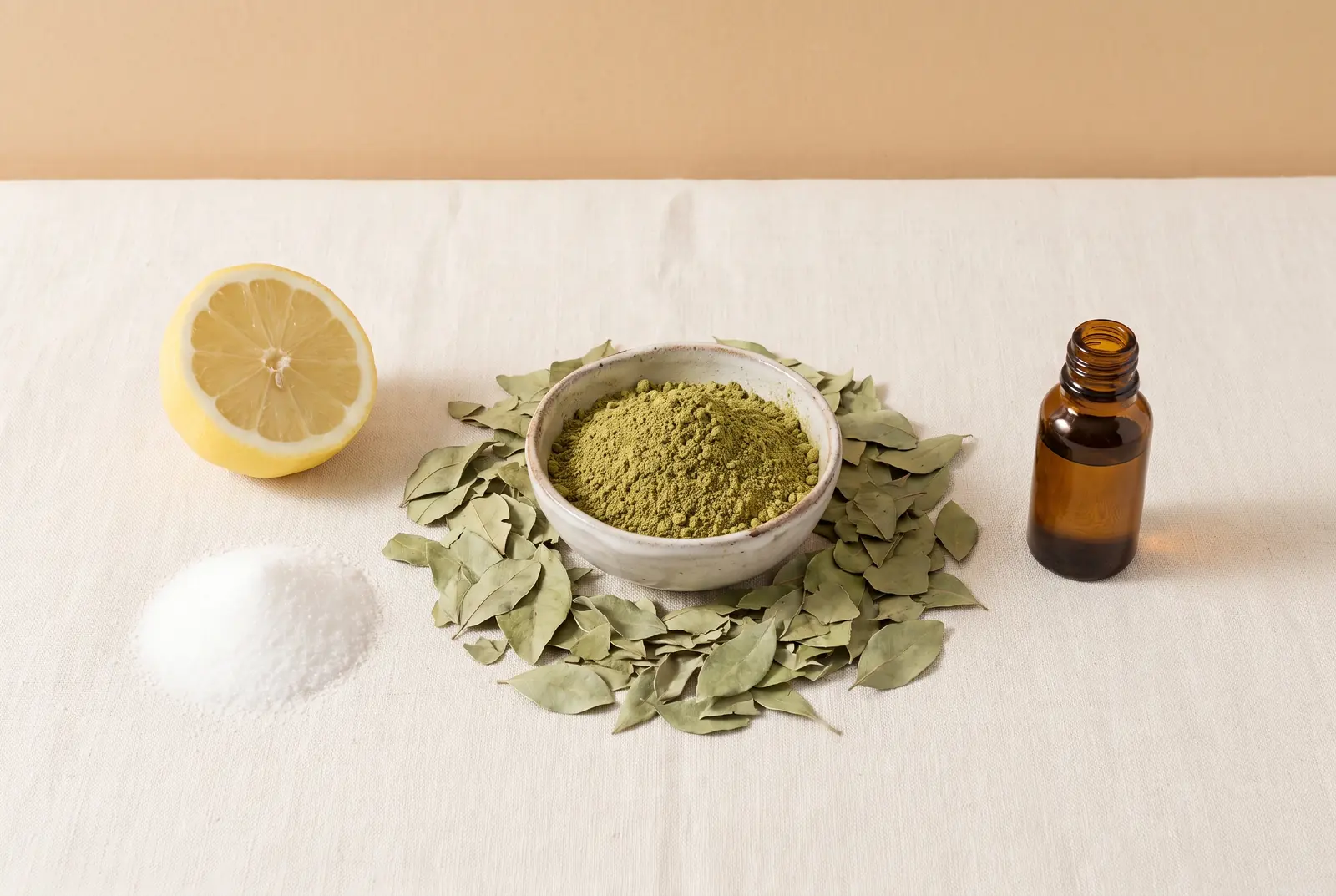
My paste is Natural henna powder, lemon juice, henna sugar, cajeput essential oil, lavender essential oil. Nothing else, no PPD and no "black henna."
I offer a patch test ahead of a full booking if you want that reassurance, particularly for a bridal design.
What to do if a reaction has already started
This page cannot diagnose you and is not a substitute for medical advice. If there is swelling of the face, lips or throat, or any difficulty breathing, treat it as an emergency: call 999 or go to A&E. For blistering, spreading redness, weeping skin, or a reaction that is getting worse rather than settling, contact your GP or call NHS 111 for advice.
If you still have any of the paste, its cone or its packaging, photograph it and keep it. It helps a clinician understand what they are treating, and it is exactly the kind of evidence Trading Standards and OPSS use to trace where an illegal product came from.
Who is most at risk
Children and anyone being exposed to PPD for the first time carry the most risk, because a first exposure is what creates the sensitisation that makes every later exposure, including a routine box of hair dye years later, more dangerous than the last. The British Skin Foundation's own survey found this risk sits at a similar level, around one in five, for both children and adults, and that most people carrying that risk do not know it.
Questions people actually ask
What happens if you get henna in a cut or on broken skin?
Henna paste, natural or not, should not go over a cut or broken skin. Broken skin absorbs whatever is in the paste far more readily than intact skin, so if the paste happens to contain PPD the reaction risk is higher, and even natural ingredients can sting an open wound. If you have a graze or cut where a design is planned, ask your artist to work around it rather than over it.
Is coloured henna, like blue, white or true black, safe?
Real henna cannot produce blue, white or true black. Genuine henna paste, made from the Lawsonia inermis plant, stains shades of orange, brown and rust red only. Any product sold in a colour that henna cannot naturally reach is being coloured by something else, so ask exactly what that something else is before you agree to it.
Can natural, PPD-free henna still cause a reaction?
Rarely, yes. Natural henna paste often includes essential oils such as eucalyptus or tea tree to help the stain develop, and a small number of people are sensitive to these too. It is a much milder category of risk than PPD sensitisation. I offer a patch test before a full booking if you want the reassurance.
Are black henna product recalls still happening in the UK?
Yes. The Office for Product Safety and Standards recalled Hania Bridal Henna Paste and Nadara Mehndi Henna Cone, both found to contain phenol, a banned chemical. Real recalls on real products currently sold shows this is an ongoing enforcement problem, not a historic scare story.
Does Piya Designs use black henna?
No. My paste is Natural henna powder, lemon juice, henna sugar, cajeput essential oil, lavender essential oil. It is PPD-free, and I will show you what is in it before I mix a single cone. See the natural-versus-black comparison above and judge for yourself.